
Finding the cheapest electricity in Texas’s deregulated areas comes down to timing. Prices shift with weather, demand, and wholesale market conditions, and certain months consistently offer better deals. This guide breaks down the seasons, hours, and contract windows that historically deliver the lowest electricity rates, plus how to choose a plan that keeps your bill stable year-round.
TL;DR: The Cheapest Times for Electricity in Texas (in Dergulated Areas)
- Electricity rates in Texas are typically lowest in the spring and fall when grid demand is low.
- Rates spike in summer and during cold winter periods.
- The best time to shop for a new plan is April/ May or September/October.
The Savvy Texan's Guide to Cheaper Electricity
Why Electricity Prices Change Throughout the Year in Texas
Texas electricity rates aren’t static year-round. Seasonal shifts in demand influence market pricing and help determine what rates are available. When shopping for electricity rates in Texas’s deregulated areas, there are some things to consider.
Why Electricity Rates Drop in Spring and Fall
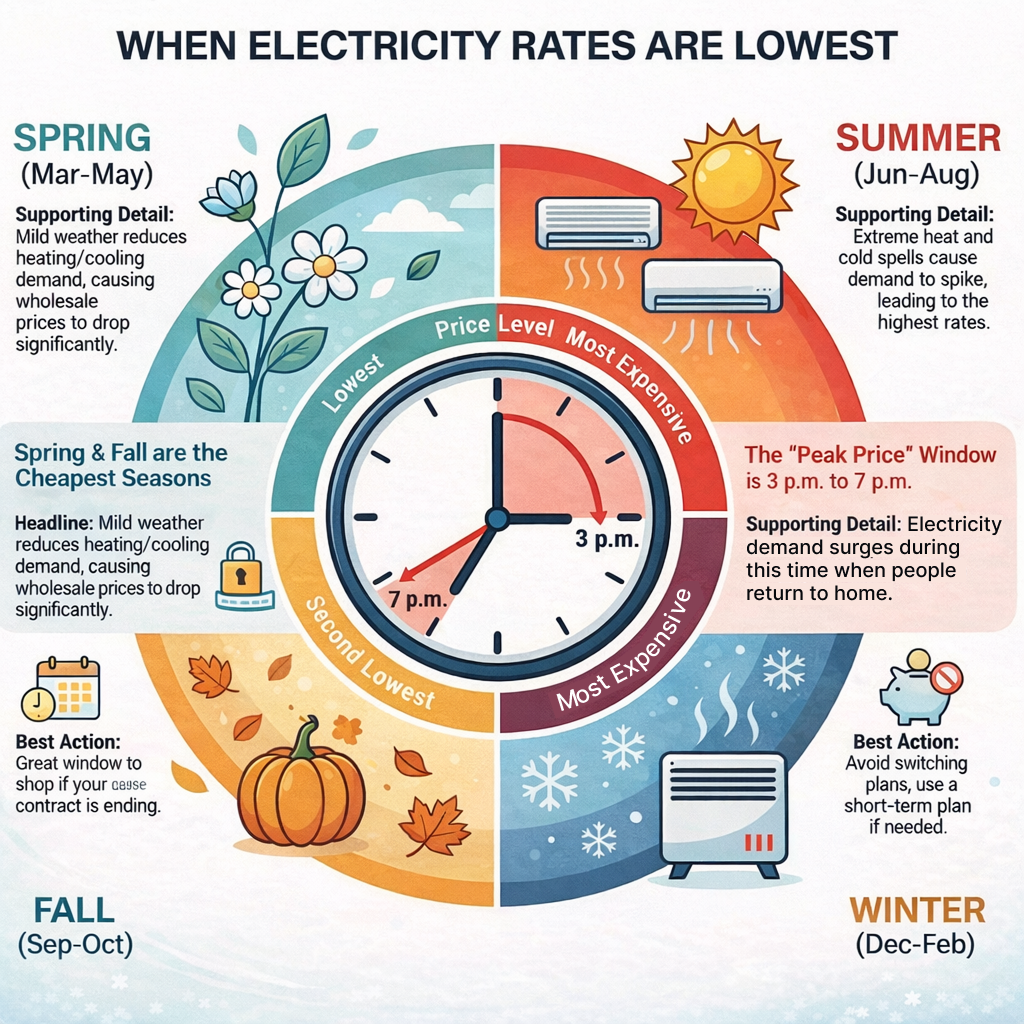
Mild temperatures mean Texans use far less heating and cooling. With lower demand on ERCOT’s (Electric Reliability Council of Texas) grid, wholesale electricity prices fall, and Retail Electric Providers (REPs) offer more competitive fixed-rate plans.
Why Electricity Rates Spike in Summer and Winter
Extreme heat drives heavy air-conditioning use, pushing ERCOT demand to its highest point of the year. Winter cold fronts can create similar short-term spikes due to increased heating needs. High-demand periods reduce promotional pricing and increase volatility, especially for variable-rate plans.
Cheapest Electricity Rates in Texas by Season (Spring, Summer, Fall, Winter)
Let’s review when electricity rates are lowest each season so you can shop at the right time.
| Season | Months | Price Level | Why It Happens | Best Action for Texans |
|---|---|---|---|---|
| Spring | March – May | Lowest rates of the year | Mild weather → low AC/heating demand → cheaper wholesale prices | Lock in a fixed-rate plan; ideal for long-term contracts |
| Fall | September – October | Second-lowest rates | Demand dips before winter → REPs offer competitive pricing | Shop for new plans if your contract ends soon; long-term plans can help you keep a lower rate year-round |
| Summer | June – August | Most expensive | Extreme heat → heavy AC usage → ERCOT grid stress → higher electricity prices | Avoid switching; use short-term bridge plans if needed |
| Winter | November – February | Variable, but often higher | Freezing events → spike in demand → temporary rate surges | Monitor rates; stay on fixed-rate plans to avoid volatility; short-term plans may be helpful until rates drop again |
Cheapest Time of Day for Electricity Use in Texas (Off-Peak vs Peak Hours)
Your plan type determines whether when you use electricity affects your rates. Time-of-use (TOU, or free electricity) plans offer periods of free or reduced electricity price (energy charge) that can help lower your bill if your usage habits align with their structure. TDU delivery charges, base charges, and taxes still apply during these free periods.
Off-Peak Hours: When Electricity Is Cheapest
TOU plans typically offer the lowest rates during:
- Late night to early morning (for example, 9 p.m.–6 a.m., depending on your plan)
- While limited, some REPs offer a short window during midday
- Weekends can be cheaper only if your plan defines them as off-peak/free.
Peak Hours: When Electricity Costs the Most
Demand is often highest during the afternoon/early evening (~3 p.m. to ~7 p.m.) on weekdays when most Texans return home from work and school. Because of this, electricity rates tend to increase during these hours.
How TDUs Affect Electricity Prices in Texas (CenterPoint, Oncor & More)
Your Transmission and Distribution Utility (TDU) charges a separate delivery fee on every bill. These regulated fees often update multiple times per year and vary by service area, which means two households with identical electricity plans can pay different totals each month depending on the TDU.
The major TDUs in Texas include:
- CenterPoint Energy
- Oncor
- AEP Texas North
- AEP Texas Central
- Texas-New Mexico Power (TNMP)
- Lubbock Power & Light (LP&L)
At a given address, your TDU doesn’t change—even if you switch providers.
How to Lock in the Cheapest Electricity Rates in Texas
Now you know when electricity rates are cheapest in Texas, but how do you put that information into action?
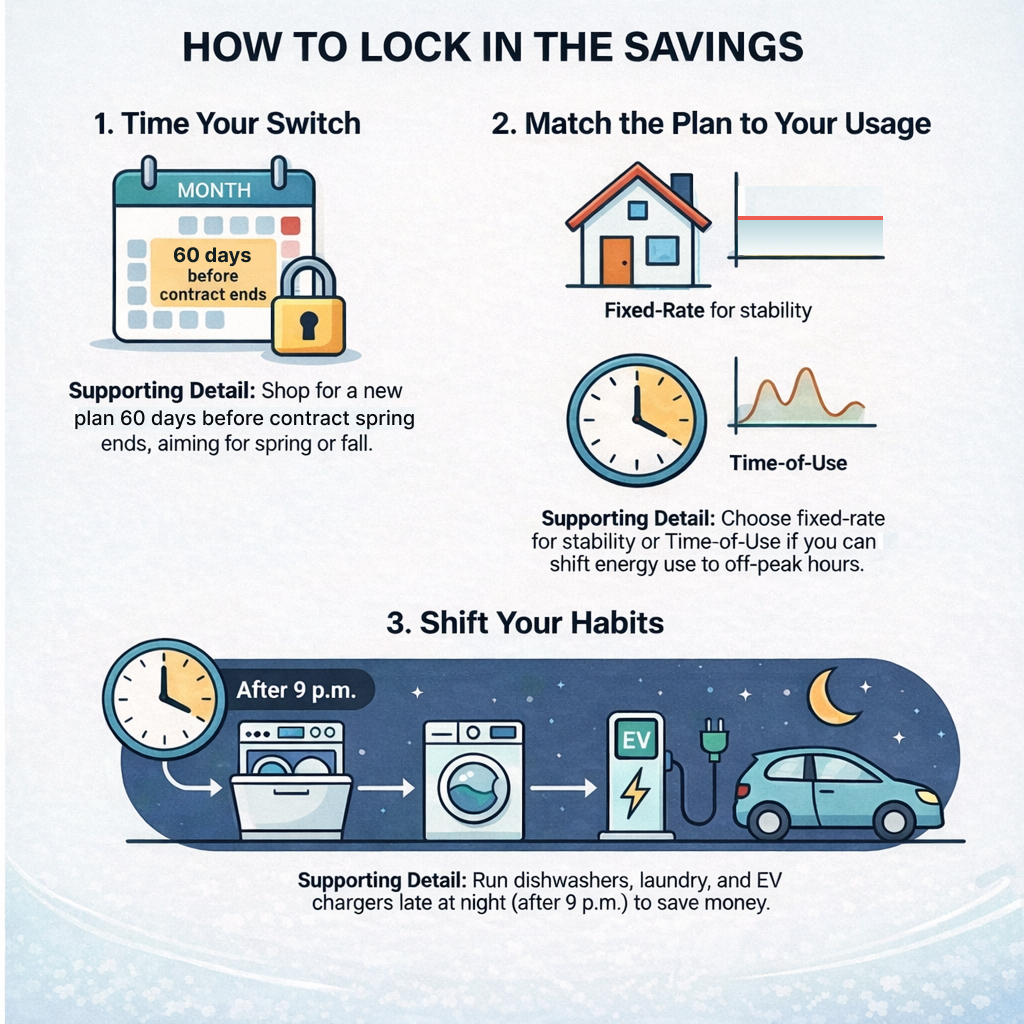
1. Shop for Electricity in Spring or Fall (Best Months to Save)
Electricity plans are generally priced lowest when seasonal demand is minimal. If your current contract expires in the summer or winter, you may want to consider a short-term bridge plan until rates decrease again.
2. Choose the Best Electricity Plan Type for Your Usage
- Fixed-rate plans: Best long-term stability
- Time-of-use plans: Effective if you can shift usage to off-peak hours
- Prepaid/no-deposit plans: Credit-flexible options
- Bill/usage credit plans: Can be good for households with consistent usage
- Tiered plans: Can benefit those whose usage is within the plan’s most favorable pricing tier
3. Compare Electricity Costs Using Power Wizard’s Marketplace
Power Wizard makes finding the right electricity plan easy. Just enter your ZIP code to see what’s available to you, alongside monthly bill estimates based on average usage levels. Start comparing today!
4. Monitor Usage and Shift High-Demand Activities
Usage habits can reduce your bill more than switching providers:
- Adjust your thermostat a few degrees during peak months
- Use smart thermostats for scheduling (if on a TOU plan)
- Run dishwashers, washers, and dryers during off-peak hours (if on a TOU plan)
- Maintain or replace inefficient HVAC systems
- Improve insulation and seal air leaks
When Texans Should Switch Electricity Providers (Timing Guide)
Many shoppers start comparing offers 30–60 days before renewal. You can compare earlier, and you can usually schedule a switch date—but timing rules vary by provider and contract. Ideally time for shopping rates is in the spring or fall. Shopping early can help you lock in lower rates before seasonal spikes. However, keep in mind that switching plans before the final 14 days of your contract for any reason other than moving may incur an Early Termination Fee (ETF).
If your contract ends in July, August, or early September, consider:
- A 3-month bridge plan
- A short month-to-month plan (short-term only)
- Shop early (up to 90 days depending on the REP) and schedule your switch to happen during the final 14 days of your current contract
- Switching early if your ETF is lower than the savings you’d gain
Final Takeaway: How to Time Your Switch for the Lowest Texas Electricity Rates
Electricity prices in Texas rise and fall with the seasons. Summer is often the highest. Winter can be moderate, but severe cold events can cause sharp spikes—especially on variable or indexed plans. Power Wizard helps you find a plan that fits your needs year-round by comparing real costs based on average usage levels and location.
FAQs: When Electricity Is Cheapest in Texas
Electricity is typically cheapest in Texas during spring and fall, when grid demand is lowest.
Historically, the months with the lowest electricity rates are March, April, and May, followed by September and October.
Off-peak hours—late night and early morning—are usually cheapest for TOU or free-nights electricity plans. Other plans do not have rates that change by time of day.
Yes, if your plan offers off-peak or free-night pricing. Other electricity plans charge the same price per kWh at all times of day.
Table of Contents
Related Articles
-
 August 18, 2023
How to clean your solar panels
Click on a section to skip directly to it: Why is it important to clean your solar panels?Solar panel cleaning: a step-b...
-

-