
Power Wizard is an independent electricity marketplace offering clear and unbiased information. The companies featured do not influence our editorial process, even when we showcase their products. Check our editorial process and how we make money.
Where Can You Choose? States with Deregulated Electricity Providers
Not every U.S. state gives residents the freedom to choose their electricity provider. In deregulated states, competition among providers allows consumers to shop for the best rates and plans for their specific needs.



















Residential and Commercial Electricity Rates by State
Electricity rates aren’t universal. The cost you pay per kilowatt-hour (kWh) can vary significantly depending on your location. In deregulated states, competition among providers can lead to better rates, but it can also result in confusion if you’re not sure what to look for. Factors like demand, energy generation mix, regional utility fees, and seasonal trends all contribute to these rate differences.
To make comparison easier, the Power Wizard experts have created a table of electricity rates by state. For the most accurate and up-to-date rates, visit your state-specific page.
Pro Tip
All electricity plans include Transmission and Distribution Service Utility (TDSU) fees. These regulated charges cover grid maintenance and typically update a few times per year. No matter which retail electricity provider (REP) you choose, your TDSU fees will remain the same.
National Electricity Rates: Key Residential and Commercial Statistics
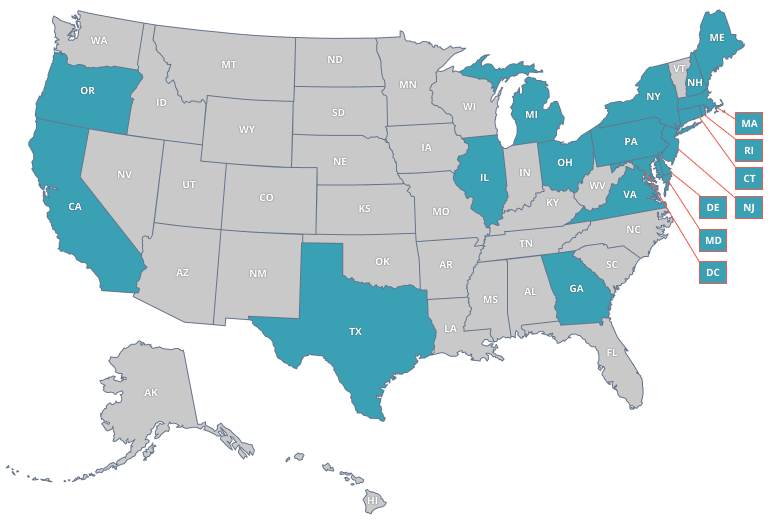
Below you can see a map of all the states that have at least some level of electricity deregulation in blue and regulated states in gray:
Residential Energy Rates (Updated September 2025)
- Average U.S. Residential Electricity Rate: 18.34¢ per kilowatt-hour (kWh)
- State with the Highest Average Residential Rate: Hawaii at 52.72¢/kWh
- State with the Lowest Average Residential Rate: Nevada at 13.11¢/kWh
Commercial Energy Rates (Updated September 2025)
- Average U.S. Commercial Electricity Rate: 14.19¢ per kilowatt-hour (kWh)
- State with the Highest Average Commercial Rate: Hawaii at 48.05¢/kWh
- State with the Lowest Average Commercial Rate:North Dakota at 8.02¢/kWh
| State | Avg. Residential Rate (¢/kWh) | Avg. Commercial Rate (¢/kWh) | Provider Options |
|---|---|---|---|
| Alabama | 16.40 | 14.67 | Regulated |
| Alaska | 28.21 | 23.42 | Regulated |
| Arizona | 15.18 | 12.47 | Regulated |
| Arkansas | 14.12 | 11.54 | Regulated |
| California | 34.74 | 27.33 | Moderate |
| Colorado | 17.13 | 14.19 | Regulated |
| Connecticut | 24.32 | 19.62 | Moderate |
| Delaware | 19.29 | 14.40 | Moderate |
| District of Columbia | 24.39 | 23.38 | Moderate |
| Florida | 15.10 | 11.47 | Regulated |
| Georgia | 16.36 | 11.91 | Moderate |
| Hawaii | 52.72 | 48.05 | Regulated |
| Idaho | 14.37 | 9.92 | Regulated |
| Illinois | 19.89 | 14.53 | Moderate |
| Indiana | 17.51 | 14.15 | Regulated |
| Iowa | 15.93 | 12.79 | Regulated |
| Kansas | 15.71 | 12.27 | Regulated |
| Kentucky | 14.26 | 12.40 | Regulated |
| Louisiana | 13.49 | 11.64 | Regulated |
| Maine | 29.59 | 22.24 | Moderate |
| Maryland | 21.84 | 16.84 | Moderate |
| Massachusetts | 29.61 | 24.52 | Moderate |
| Michigan | 22.99 | 16.63 | Moderate |
| Minnesota | 17.52 | 13.68 | Regulated |
| Mississippi | 14.88 | 13.83 | Regulated |
| Missouri | 16.22 | 12.71 | Regulated |
| Montana | 15.14 | 13.48 | Regulated |
| Nebraska | 13.25 | 8.82 | Regulated |
| Nevada | 13.11 | 9.83 | Regulated |
| New Hampshire | 27.01 | 21.22 | Moderate |
| New Jersey | 24.95 | 18.47 | Moderate |
| New Mexico | 15.06 | 10.82 | Regulated |
| New York | 29.49 | 23.56 | Moderate |
| North Carolina | 14.74 | 10.51 | Regulated |
| North Dakota | 14.12 | 8.02 | Regulated |
| Ohio | 19.19 | 13.77 | Moderate |
| Oklahoma | 14.33 | 9.90 | Regulated |
| Oregon | 16.32 | 10.59 | Moderate |
| Pennsylvania | 21.73 | 13.33 | Extensive |
| Rhode Island | 29.23 | 22.70 | Moderate |
| South Carolina | 15.55 | 11.62 | Regulated |
| South Dakota | 15.36 | 11.35 | Regulated |
| Tennessee | 14.07 | 13.94 | Regulated |
| Texas | 15.94 | 8.66 | Extensive |
| Utah | 13.37 | 10.99 | Regulated |
| Vermont | 24.44 | 21.22 | Regulated |
| Virginia | 17.22 | 10.99 | Moderate |
| Washington | 14.91 | 11.77 | Regulated |
| West Virginia | 15.45 | 11.09 | Regulated |
| Wisconsin | 19.56 | 14.05 | Regulated |
| Wyoming | 15.24 | 10.01 | Regulated |
Top 5 States with the Lowest Residential Electricity Rates
1. Nevada – 13.11¢/kWh
2. Nebraska – 13.25¢/kWh
3. Utah – 13.37¢/kWh
4. Louisiana – 13.49¢/kWh
5. Tennessee – 14.07¢/kWh
Top 5 States with the Highest Residential Electricity Costs
1. Hawaii – 52.72¢/kWh
2. California – 34.74¢/kWh
3. Massachusetts – 29.61¢/kWh
4. Maine – 29.59¢/kWh
5. New York – 29.49¢/kWh
What Affects Electric Rates? Cost Factors for Residential and Commercial Users
Electricity rates vary by state due to a mix of market structure, infrastructure, geography, and demand. The Power Wizard energy experts have broken down cost factors for you below:
- Fuel Source Availability: States that use cheaper, local sources, such as coal or hydropower, tend to have lower rates. Regions relying on expensive imports or renewable sources (e.g., natural gas, solar) often have higher prices.
- Market Structure: Regulated states often have more stable pricing, but that doesn’t always mean lower rates. Other factors—like demand, population density, fuel access, and infrastructure—can have a bigger impact. Texas, a deregulated state, regularly sees lower average rates than regulated states like Hawaii or California. If you live in a deregulated state, the best way to get lower rates is to shop around.
- Transmission and Distribution Costs: The cost of maintaining infrastructure to deliver electricity, including poles, wires, and substations, affects rates. States with older or complex grids may face higher delivery fees.
- Electricity Demand and Population Density: Dense or industrial states with high energy demand (e.g., New York, Massachusetts) often face elevated prices due to consumption needs and grid strain.
- Weather and Climate: States with extreme seasonal temperatures use more electricity for heating or cooling. This demand spike influences rates, particularly in warmer states like Texas or Florida.
- Regulatory and Environmental Policies: Local laws and incentives supporting green energy, emissions limits, or renewable investments can impact generation costs.
- Transmission Congestion and Energy Imports: States that import large amounts of electricity or experience congestion on transmission lines may pay more due to limited supply or delivery inefficiencies.
- Emergency Preparedness Costs:Investments in weatherproofing, storm recovery, or wildfire prevention can raise infrastructure costs that get passed on to ratepayers.
- Rate Structures and Surcharges: Tiered pricing, time-of-use rates, seasonal adjustments, and usage penalties can all influence the final rate customers pay.
Key Takeaway:
While deregulation introduces choice, it doesn’t guarantee cheaper rates. Consumers can save by comparing plans that fit their energy usage patterns. Power Wizard simplifies this process by using advanced tools and expert insights to help you find the best electricity rates and plans all in one place.
Pro Tip:
Short-term plans with low starter rates often expire during high-demand seasons, like summer. This can force you to renew at peak prices. Always check the contract end date before signing up.
With Power Wizard’s smart comparison tool, you can view real-time electricity rates in your area and find the best fit for your home or business. Enter your ZIP code now to kickstart your search!
Frequently Asked Questions
Energy deregulation means you get to choose your electricity provider instead of being locked into a single utility company. In deregulated markets like Texas, retail electric providers (REPs) compete for your business, giving you more options and potentially better rates.
Electricity rates vary across the country because every state has a different mix of fuel sources, infrastructure, policies, weather, and demand. A state that produces its own energy from low-cost sources may have lower rates than one that relies on imports or green energy mandates. Local regulations and whether a state is deregulated also play a big role in what you pay.
The easiest way to find the best electricity rate? Use Power Wizard’s comparison tool! Just enter your ZIP code and view the electricity plans, providers, and rates available in your area in seconds. You can even enroll in a plan right from our website, so you don’t need to jump between REP portals.
The cost of electricity depends on where you live, the amount of energy you use, and the type of plan you’re on. Rates can range from just a few cents per kilowatt-hour to over 30 cents in some areas. Using Power Wizard’s comparison tool can help you find an electricity plan that fits your needs and budget.
A fixed rate stays the same each month, making it easier to budget. A variable price changes based on the market and can jump up when demand is high. An indexed rate is tied to a specific market formula, which means your bill can change based on outside factors. The best plan type depends on your energy needs, lifestyle, and wants.
Generally, the best time to lock in a new plan is during the spring or fall when energy demand is lower and rates are more competitive. Shopping during extreme heat or cold can lead to higher prices.