Switching electricity plans in Texas’s deregulated areas should be simple. After all, deregulation was supposed to give Texans more choice, more control, and better prices. But in reality, many people can end up paying more if they don’t take the right steps.
That usually isn’t because they chose the wrong provider. It’s because small details in the plan structure, pricing, and fine print get overlooked. In this guide, Power Wizard’s energy experts will break down the seven most common mistakes Texans make when switching electricity plans, and how to avoid them so you can choose with confidence and keep your bill predictable.
On paper, having dozens of plans to choose from sounds like a good thing. In practice, it creates a lot of noise. Texans have to compare electricity plans with different rate structures, bill credits, usage tiers, and contract terms, all while trying to predict how much power their home will actually use throughout the year.
Electricity usage in Texas isn’t steady. It swings with the seasons, especially during long summers and colder winter snaps. A plan that looks cheap at one usage level or in one month can end up costing much more once real usage and delivery charges are factored in. Most Texans don’t realize how much their electricity usage varies month to month, leading them to choose plans that don’t align with their actual needs and lifestyles.
Most electricity switching mistakes aren’t dramatic or noticeable. They’re small, easy-to-miss decisions that don’t show up until the first or second bill arrives. A plan might advertise a low rate, a special credit, or a limited-time perk, but the way those features interact with real usage is where problems start.
Below are the seven most common mistakes Texans make when switching electricity plans, along with why they matter and how to avoid them before they cost you more than expected.
Many Texans assume the cheapest electricity plan is the one with the lowest advertised kWh (kilowatt-hour) rate. That’s the first and often the most expensive mistake. A plan can show a “9.3¢ per kWh” rate on a listing page and still cost more each month than the advertised rate. The reason is simple: the kWh rate is only one variable in a much larger pricing formula.
Texas electricity plans often use usage tiers, bill credits, and promotional structures that adjust the effective price you pay based on how much electricity your home actually uses. If your usage doesn’t align with those structures, the “cheap” rate doesn’t apply to your bill.
Electricity advertising in Texas focuses heavily on the headline rate. Providers are allowed to promote the lowest possible kWh price on a plan, even if that price only applies at a very specific usage level, most commonly 1,000 or 2,000 kWh.
Many shoppers assume:
In reality, your monthly kWh usage determines whether you receive the advertised rate or fall into a higher-cost tier. The rate you see is not guaranteed across all usage levels. Based on the example mentioned above, the advertised rate of a particular plan at 1,000 kWh is 9.3¢, but the actual rates range as follows:
| Monthly Usage | Tiered Plan Price per kWh |
|---|---|
| 500 kWh – 999 kWh | 22.3¢ |
| 1,000 kWh – 1,999 kWh | 9.3¢ |
| 2,000 kWh+ | 15.3¢ |
When you choose a plan based only on the posted kWh rate, you may run into:
This is how many Texans end up paying more per month on a plan that looks inexpensive at first glance.
Let’s use a household in Katy, Texas that averages about 875 kWh per month as an example. They compare:
Many shoppers would automatically pick Plan A because of the lower kWh rate. However, when actual usage is applied:
In this case, the plan with the higher advertised rate results in a lower bill.
Instead of shopping by headline rate, Texans should compare:
The goal is not to find the lowest rate, but the plan that costs the least at your average kWh usage.
Many Texans switch electricity plans based on estimated or average energy usage rather than historical data. They guess their usage or rely on a single recent bill, assuming it represents their regular consumption. Electricity usage in Texas changes significantly throughout the year. A plan that works well at one usage level can become expensive when seasonal demand shifts. Because of this, guessing your average usage almost always leads to choosing the wrong plan.
This mistake happens for two main reasons. The first reason is that electricity usage is often poorly understood. Many people don’t know how many kWh they use each month, and even fewer realize how much that number changes each season.
Second, the market encourages oversimplified shopping. Electricity Fact Labels (EFLs) typically show pricing at only three usage points: 500, 1,000, and 2,000 kWh. This creates the illusion that most homes fit neatly into one of those buckets. In reality, usage varies based on home size, insulation, HVAC efficiency, weather, work-from-home habits, and lifestyle changes.
Because Texas electricity pricing depends on usage, shopping without real data can cause you to select a plan that:
Let’s say a Plano household estimates its usage at 1,000 kWh per month based on its average bill. After reviewing 12 months of actual data:
They chose a plan with a large bill credit at exactly 1,000 kWh (similar to the example in mistake #1). What happens:
To avoid this mistake, Texans should:
Reviewing actual usage data is the best way to match a plan to your home.
Power Wizard helps eliminate guesswork by:
REPs can choose to advertise just the energy rate (with the appropriate disclaimers), which will leave out the Transmission and Distribution Utility (TDU) charges, making the plan look cheaper. These fees, which are usually part of the advertised rate, are set by your local Transmission and Distribution Utility (like Oncor Electric Delivery or CenterPoint) and apply to every plan regardless of which Retail Electric Provider (REP) you choose. Missing this crucial detail can lead to selecting a plan that looks inexpensive upfront but ends up costing significantly more once the full bill is calculated. Keep in mind that each TDU operates in a specific region and sets its own regulated delivery fees.
Most electricity shoppers assume all charges come from the provider they are switching to. They often do not realize that:
In reality, delivery charges can add $40 to $130 or more to a monthly bill, depending on the region and your electricity usage, making them one of the most significant cost drivers on your statement.
When delivery charges are ignored, shoppers often:
Two plans with identical energy rates can produce very different bills once TDU fees are applied. The difference depends on:
This leads to confusion and frequently results in choosing a plan that costs more than expected.
A household in Houston, which is in CenterPoint territory, compares two fixed-rate plans.
Plan A:
Plan B:
A shopper who focuses solely on the energy rate selects Plan B. If we model the plan at their typical usage—1,400 kWh, for example—the results may be unexpected.
Even though Plan B advertises a lower energy rate, its delivery charges push the total bill higher.
To avoid this mistake when shopping for electricity, Texans should:
Power Wizard removes delivery charge confusion by:
Switching electricity providers at the wrong time is one of the fastest ways to lose money. Some Texans switch too early and pay Early Termination Fees (ETFs), while others wait too long, fall into auto-renewal pricing, and end up paying inflated month-to-month rates. Both mistakes can erase any savings from switching.
Most Texans do not actively track their contract end date. They sign up for a plan, receive a confirmation email, and rarely look at it again. Over time, it becomes easy to forget when the contract expires. Common reasons timing goes wrong:
This creates confusion around when switching is allowed and when it is financially safe.
Switching electricity plans at the wrong time can cost you money by incurring an ETF or triggering higher auto-renewal prices. This creates two costly outcomes:
In both cases, poor timing leads to unnecessary overspending.
For example, a Fort Worth household has a 12-month contract ending August 19.
Scenario A: Switching Too Early
They find a new plan in June and switch immediately.
Scenario B: Switching Too Late
They wait until after the final bill and forget to act. The plan rolls into month-to-month pricing.
In both scenarios, the timing mistake can eliminate the benefit of changing plans.
Don’t wait for your current electricity contract to expire before researching your options. You should:
When shopping for electricity, many Texans gravitate toward brands they already recognize because familiarity feels safer. But in Texas’ deregulated market, the provider’s name often tells you very little about whether a specific plan fits your usage or your budget. This means that the most recognizable brand is not automatically the most cost-effective choice.
Electricity reliability is standardized and handled by the local TDU, not the REP. What varies is pricing structure, contract terms, and how well a plan aligns with your actual consumption.
Brand familiarity fosters trust. Large providers invest heavily in advertising, sponsorships, and name recognition, which can make them feel like the safest option.
This leads to assumptions such as:
In reality, many smaller REPs offer competitive pricing and simple plan structures. While customer service quality can vary, the electricity itself is delivered the same way regardless of provider.
When shoppers choose a provider first and a plan second, they often:
Instead of basing your decision on the brand:
Power Wizard avoids brand bias by:
Texas electricity plans often appear simple at first glance, but many include pricing mechanisms that dramatically change your bill depending on usage. These include bill credits, tiered rates, base charges, minimum usage fees, and time-of-use (TOU) structures such as free nights or weekends. Shoppers who overlook these details frequently end up paying far more than expected.
Plan designs in Texas can be complex, and important details are often buried in the EFL. Providers commonly promote a single attractive rate while the real pricing depends on narrow usage conditions. This causes many shoppers to assume:
In practice, many plans are inexpensive only under specific conditions.
Let’s take a closer look at how different pricing structures can significantly distort costs:
A household in McKinney uses between 900 and 1,300 kWh per month, depending on the season. Most of their electricity use happens during the day due to work-from-home schedules, cooking, and air conditioning.
Free Night Plan
The family chooses a free nights time-of-use plan that advertises:
The plan looks appealing because “free” electricity sounds like guaranteed savings. Here’s what actually happens:
Usage breakdown:
At 1,100 kWh total monthly usage:
After including delivery charges:
Fixed Rate Plan
Now compare that to a simple fixed-rate plan with:
At 1,100 kWh:
Despite offering “free” electricity for part of the day, the TOU plan ends up costing about $12 (this will vary per month) because the majority of usage occurs during high-priced daytime hours.
Texans should focus on how a plan behaves, not how it is marketed:
Complexity usually benefits the provider, not the customer.
Many Texans switch electricity plans by going directly to a provider’s website, often the one they already have or the brand they recognize. It feels simple, but it is one of the biggest mistakes consumers make. When you shop directly, you only see one provider’s plans and miss potentially better-fitting options across the market.
Direct switching feels familiar and convenient. Shoppers often believe:
What is often overlooked is that each provider can only show its own plans. No REP compares plans across the market or tells you if a competitor offers a better option for your usage.
Shopping with a single provider could cost you money by:
Let’s say a family in Fort Worth visits their current provider’s website when their contract ends. They see three options: a tiered plan, a fixed-rate plan, and a free weekends plan. They assume these represent the best available deals and choose the tiered option.
What they don’t see:
Rather than focusing on one REP or hopping between provider websites:
Ready to make a change? With Power Wizard, shopping for electricity is simple.
There is no single “best” energy company for every Texan, because pricing, plan structure, and availability depend on your ZIP code, TDU, and monthly usage. The best provider for someone using 2,000 kWh in Houston may not be the best for someone using 900 kWh in Dallas. The right company is the one offering the lowest total monthly bill for your household—not the lowest advertised rate.
The cheapest electricity supplier changes frequently because Texas operates in a dynamic, deregulated market where providers adjust their rates frequently (sometimes daily). No REP is consistently the “cheapest” across all ZIP codes, usage levels, or seasons. The only accurate way to identify the cheapest supplier is to compare total estimated bill costs for your specific usage in your TDU region.
Yes. Texans with low credit—or those who want to avoid upfront deposits—can still switch plans. Several REPs offer:
Most of these plans don’t require a credit check or a security deposit, making them accessible to nearly everyone. Requirements vary depending on provider and plan.

If you live in a deregulated part of Texas, you’ve probably heard, “Just go to Power to Choose.” It’s the offici...
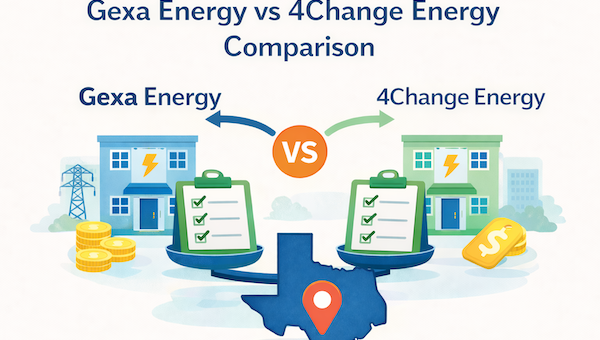
Gexa Energy and 4Change Energy take two very different paths to power Texas homes. Gexa Energy stands out for its compet...
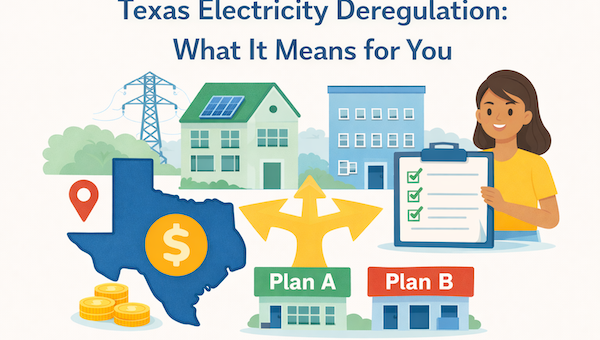
Electricity in Texas doesn’t work like it does in most other states. Because of deregulation, most Texans can choose t...