Power Wizard is an independent electricity marketplace offering clear and unbiased information. The companies and partners featured do not have any influence on our editorial process even when we showcase their products. Learn more.
In Dallas, energy choice isn’t just about picking a provider—it’s about finding a plan that fits the rhythm of your life. Prepaid electricity offers a different kind of flexibility for households that want to stay in control of their spending and avoid deposits or credit checks. Let’s explore how prepaid electricity works in Dallas so you can determine whether it’s the right choice for your household.
| Provider | Plan | ¢/kWh | Est. Monthly Bill | Term | Checkout Link |
|---|---|---|---|---|---|
| Payless Power | 6 Month - prepaid | 18.6¢ | $186 | 6 months | Checkout |
A prepaid electricity plan lets you pay for power before you use it. Instead of getting a monthly bill, your account balance decreases as you consume electricity. You can track your usage in real time and add funds whenever your balance gets low. For example, you might load $75 to start service, receive daily balance alerts from your Retail Electricity Provider (REP), and top up again once your balance drops below $20.
Many REPs also offer auto top-up options that add funds to your account when your balance reaches a certain level. This helps prevent unexpected disconnections, especially during high-usage days or while you’re away from home. You can usually link a debit card or bank account and set your own refill threshold for added convenience.
Setting up prepaid electricity typically looks something like this:
You can enroll in a prepaid electricity plan through Power Wizard’s website. Just enter your ZIP code into our comparison tool, filter the results, compare plans, and choose the best one for your needs.
In Dallas, electricity service is a partnership between Oncor Electric Delivery (your utility company) and your REP. Here’s how they work together to power your home:
Your prepaid electricity balance in Dallas changes with every kilowatt-hour you use. Along with energy costs, several small fees can affect how quickly your balance decreases. Knowing what each charge means helps you stay on top of your account and avoid surprise deductions.
Prepaid electricity costs in Dallas depend on how much power you use, your plan’s energy rate, and Oncor’s delivery charges. Your total monthly cost can fluctuate with weather, home type, and lifestyle habits. Below are common usage examples and local factors that shape how much you’ll spend on a prepaid plan throughout the year.
Your home’s characteristics and where you live in Dallas can also impact your electricity bill.
Prepaid electricity can be a smart choice for flexibility and short-term convenience, but it isn’t always the most economical option in the long term. Your best fit depends on how stable your living situation and monthly usage are.
Prepaid electricity can be convenient, but small mistakes can lead to unexpected outages or extra fees. Knowing how the system works in Oncor Electric Delivery territory helps you stay connected and avoid balance issues before they happen.
Most REPs accept card and bank payments, as well as cash reload options available at many DFW retailers and payment kiosks. Keep in mind that hours and fees vary. Always have your account ID when paying in person. Set low-balance alerts based on how many days of power you have left, not a single dollar amount. For example, get notified when your balance is low enough for only two or three days of usage so you have time to add funds.
With dozens of prepaid plans available across Dallas, finding the right one takes more than comparing rates. Each plan has its own pricing structure, balance rules, and usage thresholds that can impact how long your funds last. A little preparation before you enroll can help you avoid overpaying or losing power unexpectedly.
The Electricity Facts Label (EFL) breaks down how your prepaid plan charges for energy. Start by scanning:
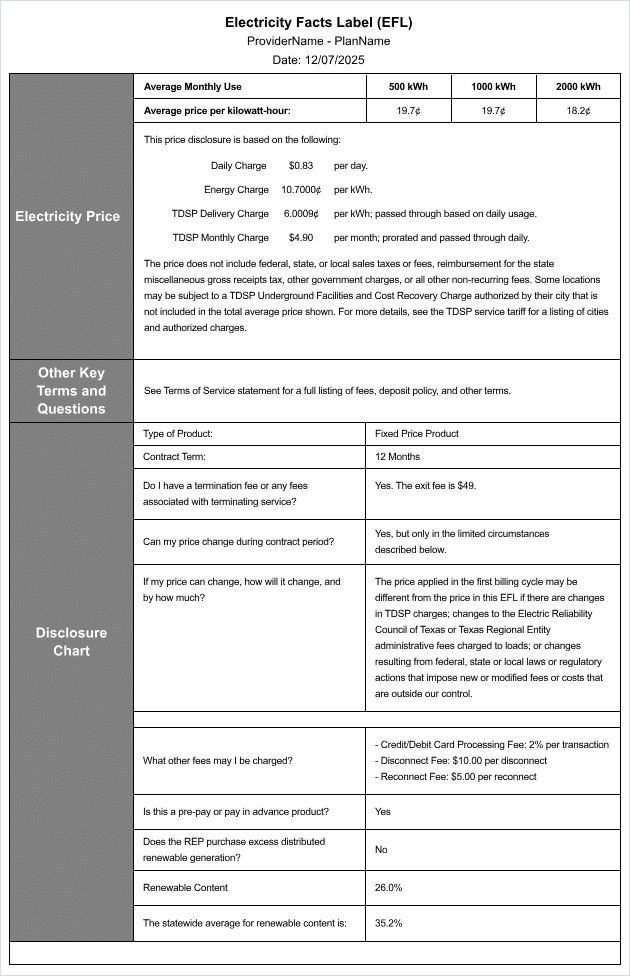
Beware of 1,000 kWh “estimated bill” marketing. These estimates assume average use, not your actual consumption. Always match the plan’s pricing to your real kWh patterns before signing up.
Every prepaid plan works a little differently, so it helps to choose one that fits how and when you use electricity. Renters or students who move frequently may want short-term plans with low or no minimum balance requirements. For families or larger households with steady energy needs, plans with lower per-kWh rates and simple daily fees often provide the best value. The goal is to align your plan’s rules—such as balance alerts, top-up options, and usage thresholds—with your daily routine and comfort level.
Dallas weather can swing from triple-digit heat to sudden winter freezes, and both can quickly change how much electricity you use. Planning ahead for these seasonal shifts keeps your prepaid balance steady and helps you avoid unexpected disconnects.
Power Wizard makes setting up a prepaid power plan easy. Just follow these steps:
Once enrolled, your new REP will handle connection and activation.
Yes, if your ESID is valid and a smart meter is installed. You must also enroll before your REP’s same-day activation cutoff time. Times and rules vary by REP.
Reconnect fees in Oncor territory are listed in your plan’s Electricity Facts Label (EFL). Oncor, the local Transmission and Distribution Utility (TDU), sets the regulated delivery portion of the fee, while your Retail Electric Provider (REP) may add its own administrative charge. Together, these cover the cost of processing and restoring service after a disconnection. Always check your EFL for the exact amount and terms before enrolling.
If you’re designated as a critical care or chronic condition individual after enrolling in a prepaid electricity plan, your service cannot continue under that plan. Texas regulations require REPs to switch eligible customers to a postpaid electricity plan to ensure continuous protection against disconnection for medical reasons. Your REP will help you find an appropriate plan for your situation.
Your plan remains active, but no energy flows while the grid is down. After restoration, usage and debits resume. Keep a healthy balance ahead of severe weather to avoid delays in remote reconnect.
Yes, depending on your provider. Many prepaid electricity providers in Dallas partner with local cash payment networks that let you reload your account in person. These include grocery stores, convenience stores, and payment kiosks across the DFW area. Bring your account number or payment ID when you go because the cashier or kiosk will need it to post your payment correctly.
Prepaid plans are generally designed to minimize or avoid deposits/credit checks, but each REP sets its own verification rules. Some identity checks or initial funding minimums may apply.
We suggest to keep an extra $40 to $80 in your account as a summer buffer but it all depends on your usage. Set your auto top-ups to trigger before your balance reaches the low threshold.