Power Wizard is an independent electricity marketplace offering clear and unbiased information. The companies and partners featured do not have any influence on our editorial process even when we showcase their products. Learn more.
Prepaid electricity gives Houston residents more control over how and when they pay for power. It’s a flexible option that works for many households, but what exactly is it, and is it right for you? Power Wizard’s energy experts have broken down prepaid electricity plans below so you can decide whether it’s the right solution for powering your Houston home.
| Provider | Plan | ¢/kWh | Est. Monthly Bill | Term | Checkout Link |
|---|---|---|---|---|---|
| Payless Power | 12 Month - prepaid | 18.4¢ | $184.00 | 12 months | Checkout |
A prepaid electricity plan lets you pay for power in advance instead of receiving a monthly bill. Your balance decreases as you use electricity, and you can reload funds at any time to keep your service active. Charges are deducted daily for your energy usage, delivery costs, and any provider fees, allowing you to track spending in real time and avoid surprises.
For example, if you load $100 onto your prepaid account, your balance decreases daily based on:
When your balance drops below your plan’s low-balance limit, you’ll receive alerts from your REP. If your account isn’t reloaded in time, your REP will send a disconnect request to CenterPoint Energy (your utility company), which can turn off service remotely through your smart meter.
To help prevent interruptions, most REPs offer auto top-up options that automatically add funds to your account when your balance falls to a set threshold. You can usually link a debit card, bank account, or cash reload service to ensure your balance never reaches zero. Setting your auto top-up trigger at two to three days of average usage instead of a flat dollar amount gives you more flexibility
In Houston, prepaid plans (and all other electricity plans) operate within CenterPoint Energy’s (your Transmission and Distribution Utility, or TDU) service area. Your REP and TDU each have distinct roles that affect how your service works and what you pay.
Prepaid electricity costs in Houston vary based on how much power you use, the season, and where you live. Because rates and delivery charges can shift throughout the year, especially during the city’s hot summer months and cold winters, it’s helpful to estimate what your monthly spending might look like in different situations.
Your neighborhood and housing type play a major role in how much electricity you use each month.
Knowing your housing setup helps you choose a prepaid plan that aligns with your expected kWh range and budget.
Prepaid electricity can be a good fit if:
However, a traditional fixed-rate plan may make more sense if:
Prepaid electricity in Houston can be a convenient way to manage your energy costs, but it also comes with unique challenges. From timing disconnects to managing payment methods, small oversights can lead to unnecessary outages or delays.
In CenterPoint’s Houston service area, prepaid electricity operates almost entirely through smart meters, so disconnections and reconnections occur remotely. Here’s what you need to know about the process:
Houston residents have several reliable ways to add funds to their prepaid electricity accounts:
For best results, set your balance alerts using your average daily electricity use instead of a fixed dollar amount. Aim to receive alerts when your remaining balance covers about two to three days of typical usage, rather than waiting until it reaches the plan’s minimum balance requirement. This gives you more time to reload before your REP submits a disconnect to CenterPoint.
Choosing a prepaid electricity plan in Houston takes more than comparing cents per kilowatt-hour. Because CenterPoint Energy’s delivery charges and REP fees can vary, the best plan for you depends on your usage habits, home type, and how you prefer to manage payments.
Every electricity plan in Houston comes with an Electricity Facts Label (EFL) that breaks down exactly what you’ll pay. This document shows your energy rate, CenterPoint delivery charges, daily fees, and any usage-based price tiers.
When reviewing an EFL, start with these key sections:
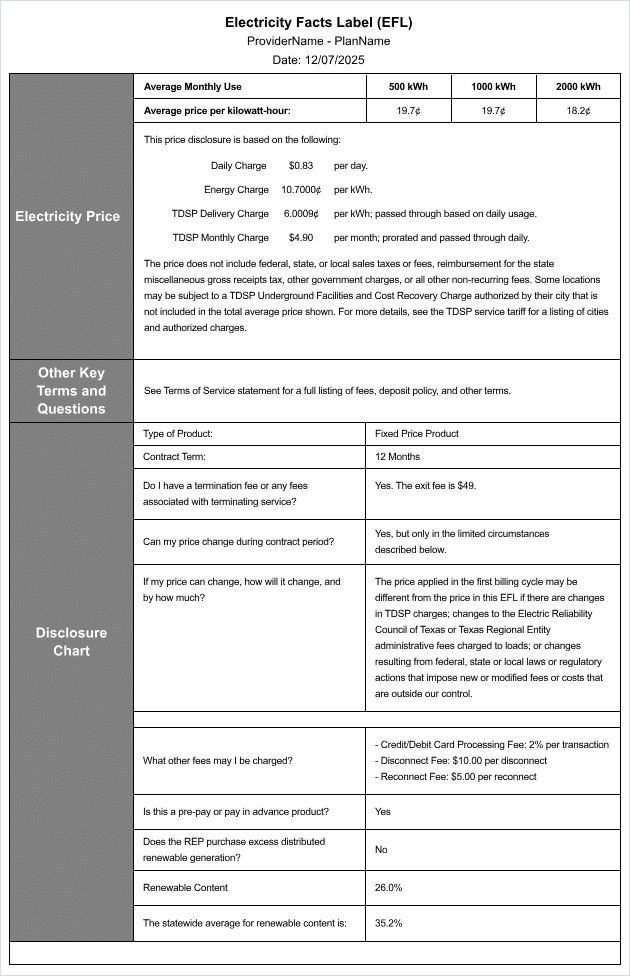
A prepaid plan that looks good on paper might not fit your actual lifestyle. If you work from home or run your A/C constantly, a plan with lower rates above 1,000 kWh could make more sense. Renters or travelers who use less electricity might prefer a plan with no daily fees and flexible top-up rules.
Before choosing, confirm:
Matching these rules to your real-world habits helps you avoid unnecessary fees and keeps your prepaid service consistent.
Houston’s extreme weather can cause sudden spikes in electricity use. Keep at least $40–$80 in your prepaid balance before major weather changes to avoid low-balance alerts or disconnects. If your power goes out during a storm, auto top-ups pause until CenterPoint restores service. Knowing your REP’s reconnection steps and maintaining a buffer can help you get power back quickly.
Watch for ERCOT conservation alerts. High grid demand can drain your balance faster due to longer run times or variable-rate adjustments. Staying alert helps you plan top-ups before critical periods.
Power Wizard makes finding a prepaid electricity plan in Houston simple. All you have to do is:
Once enrollment is complete, your REP will handle setup and activation.
There are two parties in play: the REP (your plan/account) and CenterPoint (the TDU). Reconnects on prepaid are usually remote. Any reconnect-related charge you see is defined in the plan’s EFL/TOS by the REP. Always check your plan documents for the exact line item and amount—don’t assume it’s the same across providers.
If you’re designated as a critical care or chronic condition residential customer after enrolling in a prepaid electricity plan, your service cannot continue under that plan. Texas regulations require REPs to move eligible customers to a postpaid electricity plan to ensure continuous protection against disconnection for medical reasons. Your REP will guide you through switching to an appropriate postpaid option once your status is verified.
Yes. Your plan remains active, but energy isn’t delivered during an outage because the grid is down. After restoration, your meter resumes usage, and your prepaid balance begins debiting again. Keep a healthy balance ahead of severe weather so you aren’t stuck waiting on a payment post-restoration to trigger remote reconnect.
Usually, yes. Many REPs support third-party cash reload networks throughout greater Houston (convenience and grocery locations). Fees and posting times vary by network and by REP, and hours can differ by store. Check your provider’s payment page for supported networks and bring your account number/ID to the counter.
Prepaid plans are designed to minimize or avoid traditional credit checks and deposits for many shoppers. That said, each REP sets its own verification rules; some may still perform identity checks or require a modest initial funding amount. Review the plan’s EFL and TOS to confirm exactly what’s required before you enroll.
Houston’s heat and humidity drive higher A/C runtime, so plan for a larger cushion in July–September. It’s a good idea to keep an extra $40–$80 in your account as a summer buffer and set your auto top-up to trigger before your balance reaches the low threshold but the amount depends on your own electricity usage. If your home frequently runs A/C, increase that buffer before heat waves.