Wondering how much electricity costs in a Texas apartment? The answer depends on more than just your ZIP code. From blazing summer heat to your unit’s size and energy efficiency, several factors affect how much you’ll pay each month. Let’s explore the average apartment electric bill in Texas, what drives those costs, and how to find a plan that fits your lifestyle.
Most Texas apartment renters can expect to pay somewhere between $52 and $150 per month for electricity, depending on apartment size, city, season, and the plan they’re on. The ranges below assume a typical all-in rate around 15.69¢, which aligns with recent Texas residential averages from the Energy Information Administration (EIA).
Keep in mind that these are estimates for deregulated markets (like most of the Houston, Dallas–Fort Worth, and Corpus Christi areas). Actual bills will vary based on your exact plan, TDU fees, rate structure, and usage.
| Apartment Size | Typical Monthly Usage (kWh) | Approx. Monthly Cost Range* |
|---|---|---|
|
Studio / Efficiency (350 - 550 sq ft) |
450 – 514 kWh | ~$71 – $81 |
|
1-bedroom apartment (600 - 900 sq ft) |
574 – 732 kWh | ~$90 – $115 |
|
2-bedroom apartment (900 - 1200 sq ft) |
732 – 870 kWh | ~$115 – $137 |
|
3-bedroom apartment (1200- 1600 sq ft) |
870 – 994 kWh | ~$137 – $156 |
Electricity rates can vary by location. This means that where you live in Texas can affect your monthly bill. Below are a few city-specific estimates of apartment electricity bills.
| City | Average kWh Rate (¢/kWh) |
Studio Apartment Bill Estimate (400–600 kWh) |
1-br Apartment Bill Estimate (500–800 kWh) |
2-br Apartment Bill Estimate (800–1100 kWh) |
3-br Apartment Bill Estimate (1000–1400 kWh) |
|---|---|---|---|---|---|
| Arlington | 15.24¢ | $61–$91 | $76–$122 | $122–$168 | $152–$213 |
| Corpus Christi | 15.15¢ | $61–$91 | $76–$121 | $121–$167 | $152–$212 |
| Dallas | 15.24¢ | $61–$91 | $76–$122 | $122–$168 | $152–$213 |
| Fort Worth | 15.24¢ | $61–$91 | $76–$122 | $122–$168 | $152–$213 |
| Houston | 15.75¢ | $63–$95 | $79–$126 | $126–$173 | $158–$221 |
| Plano | 15.24¢ | $61–$91 | $76–$122 | $122–$168 | $152–$213 |
| Texas City | 16.48¢ | $66–$99 | $82–$132 | $132–$181 | $165–$231 |
No two electric bills look exactly alike, even for apartments of the same size. Understanding the factors that affect your bill helps you keep your energy costs in check.
The larger your apartment, the more energy it takes to keep it comfortable. A studio or efficiency unit might use 400–600 kWh per month, while a two- or three-bedroom unit can easily exceed 1,000 kWh. More square footage means more space to cool, more lights, and often more appliances and devices. Open layouts can also affect energy efficiency, as larger living areas often require more cooling power to maintain a consistent temperature.
In Texas’s deregulated areas, your total electricity cost is split between two main charges: delivery and energy.
Together, these two parts account for the majority of your monthly cost. Your final bill will vary depending on which TDU serves your area.
Air conditioning is the biggest energy expense for most Texans. During summer, when highs regularly top 100°F, electricity use increases compared to mild spring or fall months. Heating can raise bills in the winter, too. If you notice large swings in your bill, the weather—and your thermostat—are usually to blame.
Your kilowatt-hour (kWh) rate determines how much you pay for every unit of electricity you use, and it’s one of the biggest factors in your total bill. Even small differences in rate—just a few cents per kWh—can add up quickly over a full billing cycle.
Your plan structure also affects how you’re charged. Some plans include base charges or minimum usage fees, while others offer bill credits at certain usage levels. Understanding your plan’s cost structure helps you see why two apartments that use the same amount of power can end up with very different monthly totals.
How and when you use electricity matters just as much as the amount of space you have. Renters who work from home, cook often, or run laundry during the day will naturally use more energy than those who are away most of the time. The number of people in your household and your thermostat habits also make a big difference.
Appliances and electronics are another key factor. Electric dryers, space heaters, gaming PCs, and large TVs can all draw significant power. Even smaller habits—like leaving lights on or running the A/C a few degrees colder—can noticeably raise your monthly bill over time.
You don’t need to wait for your next statement to know what your electric bill might look like. With a few quick numbers, you can estimate your monthly costs and determine what plan fits your needs.
Your usage depends on apartment size, insulation, and lifestyle. If you’ve lived in your apartment for at least one billing cycle, you can use past electricity bills to estimate your usage. If you’re in a new apartment, use this as a general guide:
You may also be able to find historical usage data using Smart Meter Texas.
Check your most recent electric bill or your Electricity Facts Label (EFL). Look for two main components:
On a simple fixed-rate plan, to get your all-in rate, you need to add the energy charge plus TDU delivery charge per kWh. Then you need to divide the monthly TDU delivery fee by the number of kWh you used or think you will use.
Add all these together to find your all-in rate, which is the true cost per kilowatt-hour you pay each month. The formula looks like this:
[(Price/kWh + TDU Delivery Charge Per kWh) + (TDU Delivery Charge (per month)/Energy Usage)]
Use this quick formula to get a rough estimate of your average electricity bill:
kWh used × price per kWh ≈ monthly bill
Example: If your 1-bedroom apartment uses 750 kWh and your all-in rate is 15¢ per kWh, your estimated bill would be about $112.50, plus any base and taxes..
If you want a quick estimate without doing the math yourself, try using an online electricity bill calculator. These tools let you plug in your average monthly usage, rate per kWh, and ZIP code to estimate your electric bill. It’s a simple way to compare plans, check if your current rate makes sense, or plan your budget before you move into a new apartment.
Keeping your apartment comfortable shouldn’t mean overpaying for electricity. With a few smart choices and simple daily habits, you can lower your bill without sacrificing comfort.
Your plan has just as much impact on your bill as how much electricity you use. If you’re on a contract with a high rate or confusing fees, switching to a more transparent plan, like a fixed-rate plan, could help lower your monthly costs. Review your Electricity Facts Label to see what you’re really paying and how your rate is structured.
Be cautious of variable-rate plans that can change month to month and cause unexpected price spikes. Look for base charges or minimum usage fees that add to your total even when you use less energy. A simple, consistent plan with a clear rate per kWh often makes budgeting easier and helps you avoid costly surprises on your bill.
Using and setting your thermostat wisely has a real impact. According to the U.S. Department of Energy, you can save about 10% on heating and cooling by adjusting your thermostat around 7 – 10 °F (up or down depending on the weather) for 8 hours a day while away or asleep.
Use smart or programmable thermostats to automatically adjust temperatures throughout the day. You can also keep blinds or curtains closed during the hottest hours, close unused room vents, and run ceiling or box fans to circulate cool air.
Small changes in routine can add up to noticeable savings. Replace old bulbs with LED lighting, and turn off electronics when not in use. Run laundry and dishwashers only with full loads. Try air-drying clothes and use the microwave or toaster oven for smaller meals instead of the full-size oven. Even simple habits like unplugging chargers or powering down gaming systems can shave dollars off your monthly total.
The timing of your plan renewal matters more than you might think. Electricity rates in Texas often drop in spring and fall, when demand is lower. Shopping for a new plan before your contract expires (you can do it 90 to 60 days prior, depending on the provider) helps you avoid automatic renewals at higher prices. If your plan is ending soon, take a few minutes to compare rates and find a plan that truly fits your apartment’s energy needs using Power Wizard’s comparison tool.
Once you know roughly how much power your apartment uses, the next step is choosing a plan that actually fits your lifestyle. In Texas, most renters may benefit from choosing a fixed-rate or prepaid (no-deposit) electricity plan. Each one trades off predictability, flexibility, and upfront cost a little differently, and the right choice can easily mean paying far less over the course of your lease.
There are other plans available for renters but these are two common plans for renters that can be compared.
| Plan Type | Best For | Monthly Cost Predictability | Contract & Flexibility | Credit Check / Deposit | Key Risks for Renters | Great Fit For… |
|---|---|---|---|---|---|---|
| Fixed-Rate | Renters on a steady budget who want a consistent rate per kWh | Same energy rate for the length of the contract | 3–24 month terms are common; an early termination fee (ETF) if you cancel early | Both often required | Locking in during high-rate periods | Budget-conscious renters who can handle a deposit and want predictable bills |
| Prepaid (No-Deposit) | Renters who can’t or don’t want to pay a deposit, credit-challenged renters | Rate can be stable, but typically higher than a traditional fixed-rate plan | Very flexible; refill as you go, often no long-term contract | No credit check or deposit; pay-as-you-go | Can run out of balance and lose power if you don’t monitor; reconnection fees | Renters or home owners rebuilding credit |
Finding the right electricity plan for your apartment shouldn’t be complicated. Power Wizard shows you available plans in one place so you can easily compare rates, terms, and real monthly costs side by side. Enter your Texas ZIP code into our smart comparison tool to get started!
Your bill may be higher for several reasons, including your plan, your usage habits, and the season. Apartments that rely heavily on air conditioning during Texas summers can see bills double or even triple in hot months. Other common factors include higher kWh rates, minimum usage fees, and older or inefficient appliances. Checking your Electricity Facts Label (EFL) and comparing it to current rates in your area can help identify where you might be overpaying.
In general, Houston apartments tend to have slightly higher average electric bills than those in Dallas. Houston’s CenterPoint service area often sees higher delivery charges, and the Gulf Coast’s heat and humidity lead to heavier A/C use. Dallas, served mainly by Oncor Electric Delivery, typically has lower delivery costs and slightly lower humidity, which helps keep overall usage a bit lower.
Yes, some REPs offer no-deposit or prepaid plans that let you start service without a credit check or deposit. Just keep in mind that prepaid plans often have higher kWh rates, require you to maintain a positive balance, and may have daily fees. They may also have reconnection fees if your balance runs out.
On average, Texas electricity rates are lower than the national average, largely due to deregulation and abundant energy supply. However, total monthly costs depend on your usage, plan type, and local delivery charges. Apartment renters often pay lower bills than homeowners because they use less electricity overall, but rates can still fluctuate with market conditions and seasonal demand.
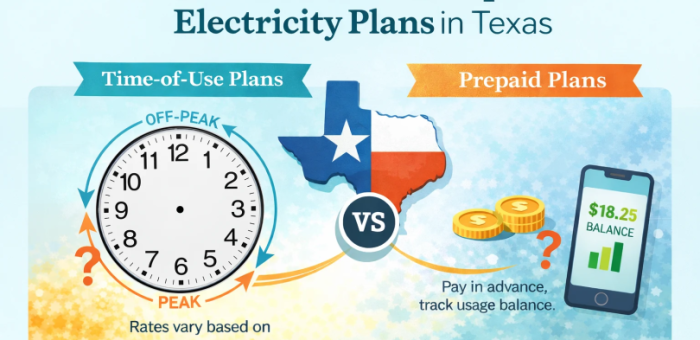
Prepaid and time-of-use (TOU) electricity plans take two very different approaches to rates and plan structure. Each can...
Power Wizard surveyed 2,260 Americans to reveal the states most likely to drive up utility bills and the everyday habits...

Windows can be a major source of energy loss in homes that rely on electric heating and cooling....