Electricity in Texas doesn’t work like it does in most other states. Because of deregulation, most Texans can choose their own retail electricity provider rather than being locked into a single utility company. This system creates competition among retail electricity providers (REPs), giving consumers the power to shop for the best rates, contract terms, and plan types that fit their household needs.
But while deregulation offers flexibility and potential savings, it can also be confusing if you don’t know where to start. In this guide, we’ll break down what electricity deregulation in Texas really means, how it works, and how you can take advantage of it to find the right electricity plan.
Electricity deregulation in Texas began in 2002, after the Texas Electric Choice Act (Senate Bill 7, 1999) restructured the state’s electricity market. The goal was to increase competition and lower prices by allowing consumers to choose their retail electricity provider. Instead of a single utility controlling every part of the process, the system was split: REPs now sell electricity plans, while utilities continue to manage the infrastructure that delivers it. This shift gave Texans more options, but it didn’t completely overhaul how power gets to your home.
Texas electricity deregulation affects who you buy electricity from, not who delivers it. Your chosen REP handles your electricity plan, pricing, and billing, while your local Transmission and Distribution Utility (TDU) is responsible for maintaining the lines, poles, and meters, as well as restoring power when there’s an outage. If you experience a power outage, you should contact your utility company, not your REP.
In deregulated areas of Texas, there are three main players you should know about: ERCOT, TDUs, and REPs.
| Role | What They Do | Examples | What It Means for You (Shopper) |
|---|---|---|---|
| ERCOT (Electric Reliability Council of Texas) | Manages the power grid and wholesale electricity market for most of Texas. Balances supply and demand, and runs the markets where power is bought and sold. | ERCOT | You never choose ERCOT, nor do you get a bill from them. They act like the “traffic controller” for the grid, ensuring enough power is available and the system stays stable. |
| TDUs (Transmission & Distribution Utilities) | Own and maintain the poles, wires, and meters. Restore power after outages and deliver electricity to your home regardless of which REP you choose. | CenterPoint, Oncor, AEP Texas, TNMP, etc. | You don’t shop for TDUs in deregulated areas. Your TDU is assigned based on where you live. Their delivery charges are regulated and appear on your bill. |
| REPs (Retail Electric Providers) | Sell electricity plans, set your energy rate, and handle billing and customer service. They buy power in the market and resell it under different plan types. | TXU Energy, Gexa Energy, Veteran Energy, 4Change Energy, etc. | This is who you actually shop for and compare. You choose your REP, plan type, and contract term. They send your bill and handle account questions. |
Not sure if your address is in a deregulated area? Check our Texas Deregulated Cities and Map page to see if you can shop for electricity plans in your city.
Texans in deregulated areas can now compare plans, prices, and contract terms to find one that fits their lifestyle and budget. The system was designed to create flexibility and savings opportunities, but it also introduced more complexity into how you shop for power.
In deregulated areas, you can decide which company bills you for electricity and what type of plan you want. REPs sell multiple plans, including fixed-rate, variable-rate, prepaid, time-of-use, bill/usage credit, and more. Both renters and homeowners in deregulated ZIP codes can shop around for their preferred REP and plan type.
In non-deregulated areas, customers don’t have that choice — the local utility sets the rate and handles everything.
Most electricity plans in Texas come with contracts that last between 3 and 36 months, while others run month-to-month. As your contract nears its end, or if your household’s energy habits change, it’s a good time to compare new plans. Keep an eye out for an early termination fee (ETF) if you plan to switch before your contract is up, because it can affect whether it makes sense to move to a different plan right away or wait until renewal.
If you decide to change plans or REPs, use Power Wizard to compare your options. All you have to do is:
Competition among REPs has led to a wide range of options, including sign-up rewards, referral bonuses, and potentially lower long-term rates. However, it has also introduced confusing offers like bill credits that only apply under certain conditions, minimum usage fees, base charges, and “free” electricity plans with built-in restrictions. Always read the EFL before committing to any plan to fully understand what it offers.
Texas electricity deregulation also changed how your bill is structured. In a deregulated area, your monthly charges come from multiple sources instead of a single utility. Some parts of your bill are set by the market and others by state regulators, so understanding which is which can help you make smarter choices about your plan and avoid unexpected costs.
Your electricity bill has several key components:
REPs are responsible for energy rate, plan structure, and fees, but TDU delivery charges remain the same regardless of which provider you choose.
Even if you and your neighbor live on the same street, your electricity bills can look completely different. It all depends on your provider, plan type, and usage.
For example, your neighbor might be on a 12-month fixed-rate plan that locks in one price per kilowatt-hour, while you signed up for a bill-credit plan that rewards you when you use a specific amount of electricity each month. Contract length and promotional pricing matter too. Someone who locked in a rate last year when prices were lower could pay less than a neighbor who recently renewed. Deregulation rewards shoppers who take the time to compare plans and match them to their usage patterns rather than just picking the first low rate they see.
Deregulation can save you money if you shop strategically. Compare plans based on your total expected bill, not just cents per kWh. Match your plan type to your home and habits, like a fixed-rate plan for a large house with steady usage or a time-of-use plan for a household that’s home mostly at night.
Keep in mind that deregulation can cost you more if you let your plan auto-renew without reviewing current rates, picking a plan that doesn’t align with your actual usage, or signing up for an advertised rate that doesn’t work for you actual usage. Understanding how your plan works and comparing regularly helps you stay in control of your costs.
Some electricity plans look like great deals at first glance, but include pricing structures or fees that can add up quickly. Many of these details are easy to miss unless you know what to look for. Below are a few common pitfalls to watch for when comparing plans.
Electricity plans in Texas must show an average price per kWh at three usage levels: 500, 1,000, and 2,000 kWh. The lowest advertised rate often applies to just one of those levels, typically 1,000 kWh. If your home uses more or less, your actual cost per kWh can be higher than the headline number. Also, be careful when trusting the advertised rates because REPs can leave out other fees making the advertised rate look cheaper than what it actually is. Always check the EFL to find the rate that matches your average monthly usage, not just the one in the ad. A
Some plans include minimum usage fees or bill credits that only apply if your electricity use falls within a certain range. For instance, a plan might offer a $50 bill credit if you use at least 1,000 kWh, but nothing if you fall short. Households in smaller spaces, like studios or one-bedroom apartments, often miss that “sweet spot” and end up paying more per kWh. If you live in a smaller home or use less energy, look for plans without usage thresholds.
Electricity contracts vary from month-to-month to multi-year terms. Shorter terms offer flexibility but come with unpredictable rates when you have to renew. Longer ones lock in a steady rate for a set period, but you’ll likely be charged an ETF if you cancel early for any reason other than moving.
It’s also important to note that seasonality can affect the rate of an electricity plan. Electricity prices in Texas often rise during the summer and winter when demand is highest, so shopping or renewing before these peak periods can help you secure a lower rate.
Prepaid and no-deposit plans let you start service quickly without a credit check, a deposit, or a long-term contract. You pay in advance and top up as needed, which can be convenient in certain situations. The tradeoff is higher daily fees, strict balance requirements, and potential reconnection costs if your balance runs out and your power is shut off. These plans can help some customers, but tend to cost more over time than traditional postpaid plans.
Deregulation gives you the freedom to shop for the best electricity plan, but turning that freedom into real savings takes strategy. With so many plan types, rates, and hidden fees, the key is to compare based on your actual usage and household needs. Here’s how to use deregulation to your benefit and avoid costly mistakes.
Before choosing a plan, get a clear picture of how much electricity you use. Your monthly kWh usage depends on factors such as home size, the number of occupants, and how often you run your air conditioning or work from home. In general:
If you have past bills, use them to find your average usage. If not, an online usage calculator or Smart Meter Texas can help you build a quick profile.
Usually, Texas electricity plans display a bundled kWh rate that already includes the energy rate, base charges, and TDU delivery fees. The tricky part is that some plans layer in extra rules that only apply at certain usage levels. Bill credits, minimum usage fees, and tiered pricing can all change your actual monthly cost depending on how many kWh you use. Even when two plans show similar kWh rates, the total you pay each month can be very different once those usage-based features kick in.
Power Wizard simplifies this comparison by showing estimated monthly costs at common usage levels, such as 500, 1,000, and 2,000 kWh. These estimates include delivery fees and other plan charges, so you can easily see how much you’d likely pay at different usage amounts.
Not every electricity plan fits every home or lifestyle. Power Wizard’s energy experts have put together a table to help you determine which plan may be right for your situation.
| Customer Situation | Best-Fit Plan Types in Deregulated Texas | Why It Fits | Watch Out For |
|---|---|---|---|
| Renters / Short-Term Stays | Prepaid/no-deposit plans; short 6–12 month fixed-rate plans | Prepaid plans provide flexibility to first-time renters with no credit. Fixed-rate plans are simple and often better suited for renters. | Short fixed terms that auto-renew at higher rates; prepaid/no-deposit plans with higher average kWh rates |
| Homeowners / Families | 12–36 month fixed-rate plans; bill credit plans | Price stability for predictable, year-round household usage; potential savings with bill credit plans if you consistently meet the usage threshold | Locking in a high rate during peak seasons; ETFs for early cancellation; losing bill credits if usage is too low |
| Bad Credit / No Credit | Prepaid / no-deposit electricity plans | Easier approval with no deposit or credit check; quick power activation | Higher effective kWh cost, reconnect fees, strict balance rules; risk of disconnection if balance runs too low |
| EV Owners / Night Owls / Weekend Warriors | Time-of-use plans; EV charging plans | Ability to take advantage of off-peak pricing | Time-of-use windows that may not align with your actual schedule |
One of the most common reasons Texans overpay for electricity is that they forget when their contract ends. When a fixed-rate plan expires, it often rolls into a variable or out-of-contract rate that can be significantly higher. To avoid that, set a reminder 30 to 60 days before your contract’s end date so you have time to compare plans and switch if needed.
Not all Texans can shop for electricity. In fact, around 10 to 15 percent of the state is still fully regulated, mostly in areas served by electric cooperatives (co-ops) and municipally owned utilities (munis) that chose not to join the deregulated market. Co-ops are member-owned, not-for-profit utilities that serve local communities, often in rural areas. Customers are considered members who elect a board to set policies and rates. These organizations own and maintain their own poles, wires, and meters.
Municipally owned utilities are operated by a city or local government. Their rates and policies are set by the city council or an appointed board, and profits are reinvested in the community. Examples include Austin Energy, CPS Energy in San Antonio, Bryan Texas Utilities, and New Braunfels Utilities.
When Texas opened its market to competition in 2002, co-ops and munis could choose whether to participate. Most stayed regulated to maintain local control and community-focused operations.
Only a few entities, such as Nueces Electric Cooperative and Lubbock Power & Light, have joined the competitive market. That means most co-op and muni customers remain outside the deregulated system.
Because Texas is divided between regulated and deregulated territories, moving from one to the other can change how your electricity service works. If you move to a regulated area like Austin (Austin Energy) or El Paso (El Paso Electric), the local utility will be your only option.
If you move from a co-op or muni to a deregulated area, you’ll gain retail choice. Instead of being automatically assigned a provider, you’ll select your own REP and plan type. If you don’t choose one, the state will assign you a “provider of last resort,” which often has higher rates than plans available in the market. However, new residents must actively select an REP to begin electricity service in a deregulated area.
Texas electricity deregulation gives most residents the power to choose, but understanding how the system works is key to getting real value from it. Knowing whether you live in a deregulated area, comparing plans by total monthly cost, and keeping track of contract dates can make a big difference in your bill. With the right approach, deregulation can give you flexibility, savings, and control over your electricity, rather than confusion or hidden costs.
Power Wizard makes electricity shopping simple. Our comparison tool shows you dozens of trusted Texas providers and plans in your area so you don’t have to hop between REP websites. Start your search today and see how Power Wizard helps take the guesswork out of deregulation.
No. Deregulation has been the standard for most of the ERCOT market since 2002, and there’s no active legislation to fully “undo” it. Lawmakers and regulators review market rules after major events (like Winter Storm Uri), but the core retail choice model remains in place for most Texans. If you live in a deregulated area today, you should assume you’ll keep shopping for plans rather than going back to a single monopoly utility.
No. Your Transmission and Delivery Utility (TDU) is responsible for maintaining lines, poles, and meters and restoring power after an outage, regardless of which Retail Electric Provider (REP) you chose. A Texas Energy customer and a Chariot Energy customer on the same street “should” get restored on the same repair schedule because the same TDU serves both. Deregulation changes who you buy your plan from, not how quickly crews respond when the lights go out.
If you lose power, you should call your TDU, not your REP. This is because your TDU is responsible for maintaining the electric grid infrastructure. Your REP only handles service, sales, and billing issues.
Not always. Deregulation can lead to lower prices through competition, but it depends on the plan you choose and your usage. Shoppers who compare options carefully can save, while others may pay more if they pick the wrong plan.
On paper, having dozens of plans to choose from sounds like a good thing. In practice, it creates a lot of noise....

If you live in a deregulated part of Texas, you’ve probably heard, “Just go to Power to Choose.” It’s the offici...
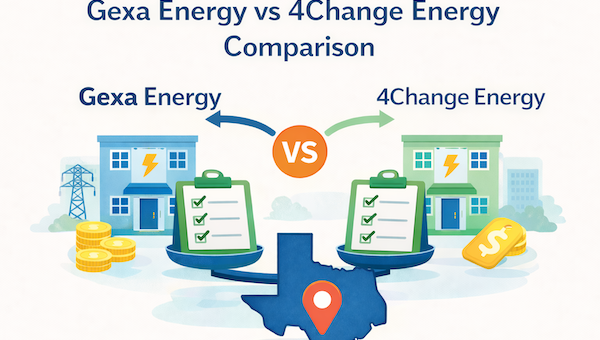
Gexa Energy and 4Change Energy take two very different paths to power Texas homes. Gexa Energy stands out for its compet...